Tape the room before ordering a sofa. A sectional that feels generous in a showroom can block the kitchen route, trap a coffee table, or make a new rug look undersized.
Treat living room furniture ideas as measured decisions: fixed room constraints first, seating footprint second, rug and table sizing third, and ordering risk last.
Measure the living room layout before choosing any sofa, rug, or sectional
A living room layout should start with fixed conditions, not a favorite sofa image. Measure wall lengths, door swings, window positions, outlets, heat registers, fireplace depth, TV wall options, and daily walkways.
The shopping risk begins when attractive furniture hides those constraints. An 8×10 rug can look correct online while landing under only half the seating group, and a chaise can cross the route from the entry to the kitchen.
What should be included in a living room measurement sketch?
The sketch should record finished dimensions. Measure wall to wall at floor level, then mark baseboards, casing, hearths, radiator covers, built-ins, floor vents, and trim projections that reduce the real furniture footprint.
- Room envelope: overall length, width, ceiling height, alcoves, bay windows, columns, sloped ceilings, and fireplace projections.
- Openings: door widths, swing arcs, sliding doors, stair openings, hallway connections, balcony doors, and the clear path from entry to seating.
- Windows: window width, sill height, register position, radiator position, and curtain stack space.
- Utilities: outlets, switches, cable plates, floor outlets, heat registers, cold-air returns, and media wiring zones.
- Furniture tests: taped rectangles for sofa depth, chaise length, coffee table reach, recliner extension, and rug edge.
Use graph paper at 1/4 inch to 1 foot, or a room-planning app with the same finished dimensions. The goal is a buying map that shows what cannot move.
Accessibility references can help a household think about routes. The U.S. Access Board identifies separate Department of Justice 2010 ADA Standards and Department of Transportation 2006 ADA Standards, a reminder to treat circulation as measurable.
Which room constraints make common living room furniture ideas fail?
Door swings create the first failure point. A hinged door needs its full arc, and a sliding door needs handle clearance, curtain clearance, and a path that does not force people around the coffee table.
Sectional returns create the second failure point. A chaise or L-shaped return works only when it lands outside the main pass-through to the hall, stairs, patio, powder room, or kitchen.
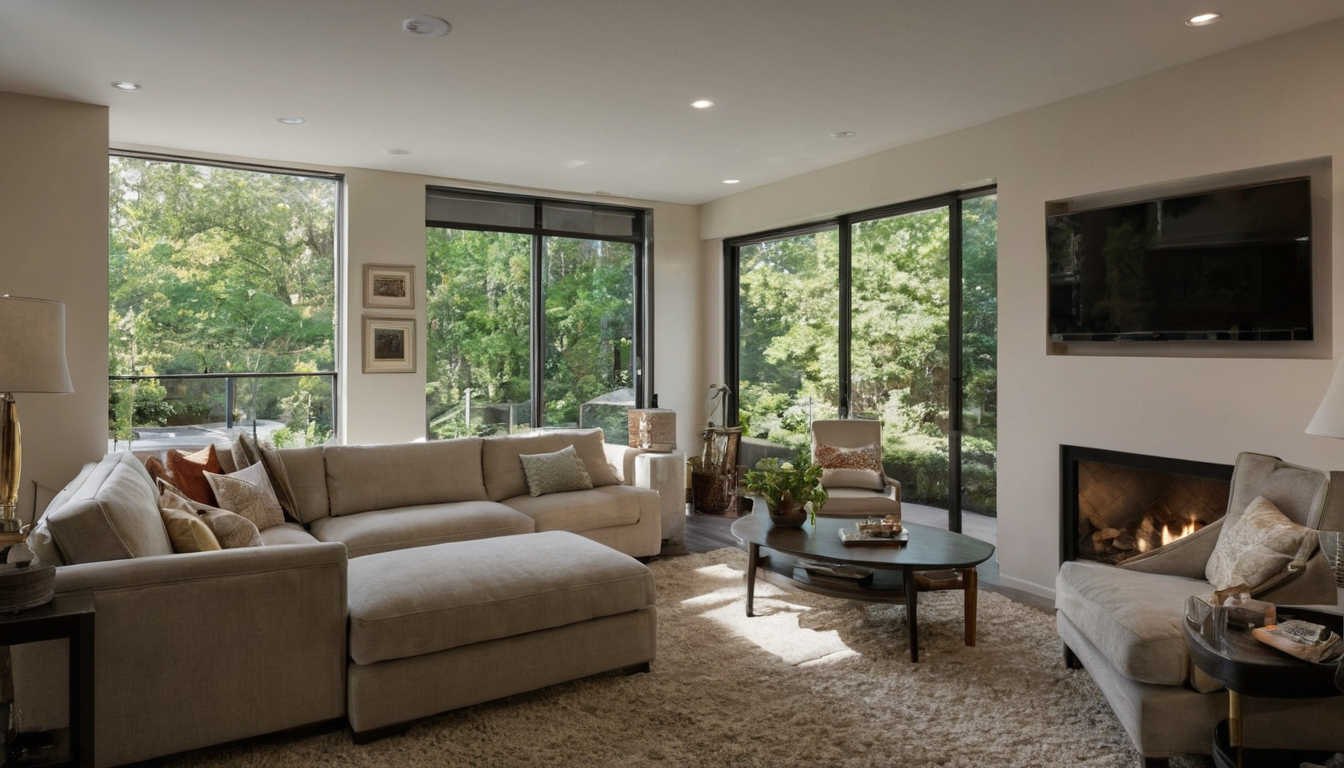
Measure the living room layout before choosing any sofa, rug, or sectional shown with finish, fixture, and clearance relationships visible.
Motion furniture creates the third failure point. Recliners need clearance behind the back and in front of the footrest, and sleeper sofas need open floor area for the mattress. If the taped outline blocks a vent, outlet, door, or walkway, the piece has failed the room.
Choose the sofa or sectional footprint by circulation clearance, not by showroom scale
The right sofa or sectional is the largest piece that still protects walking routes, conversation distance, and usable table access.
| Seating type | Typical footprint | Best room condition | Main risk before ordering |
|---|---|---|---|
| Sofa | 80 to 90 inches wide, 35 to 40 inches deep | Most rectangular living rooms | Can block a walkway if centered without rear clearance |
| Loveseat | 52 to 66 inches wide, 32 to 38 inches deep | Small rooms or secondary seating | May seat fewer people than the room needs |
| Chaise sofa | 80 to 100 inches wide, 60 to 70 inches on chaise side | TV rooms with one lounging direction | Chaise side can cut off a door or balcony path |
| L sectional | 90 to 120 inches each direction, often 36 to 42 inches deep | Open-plan corners and family rooms | Wrong return side can make the room hard to use |
| U sectional | 120 inches or more wide, with deep returns | Large rooms with one clear focal wall | Consumes flexible conversation space |
| Lounge chair | 28 to 36 inches wide, 32 to 40 inches deep | Flexible conversation seating | Needs pull-out space and a side table |
| Recliner | Varies, with extra front or rear clearance | TV rooms with protected footrest space | Open position may steal the walkway |
When is a sectional better than a sofa and chairs?
A sectional works best when the room has one dominant activity, such as watching television, reading as a family, or anchoring an open-plan corner. An L-shaped sectional can replace a sofa and two chairs when the return does not cross the main route.
A sofa plus chairs works better when the room has several doors, a fireplace and TV competing for attention, or guests who need to face each other. Chairs can rotate, move, or open a clearer path.
How much walkway space should remain around living room seating?
Main walkways should usually remain about 30 to 36 inches clear. Tight secondary gaps can work at about 24 inches, but a daily route to a kitchen, hall, stair, or exterior door needs more breathing room.
Coffee table clearance should usually sit around 16 to 18 inches from the sofa front. Behind a floating sofa, plan about 30 inches for a real walkway.
Accessibility rules are not residential comfort rules, but they help with conservative planning. The U.S. Access Board ADA Accessibility Standards cover accessible routes, doors, turning space, clear floor space, and reach ranges.
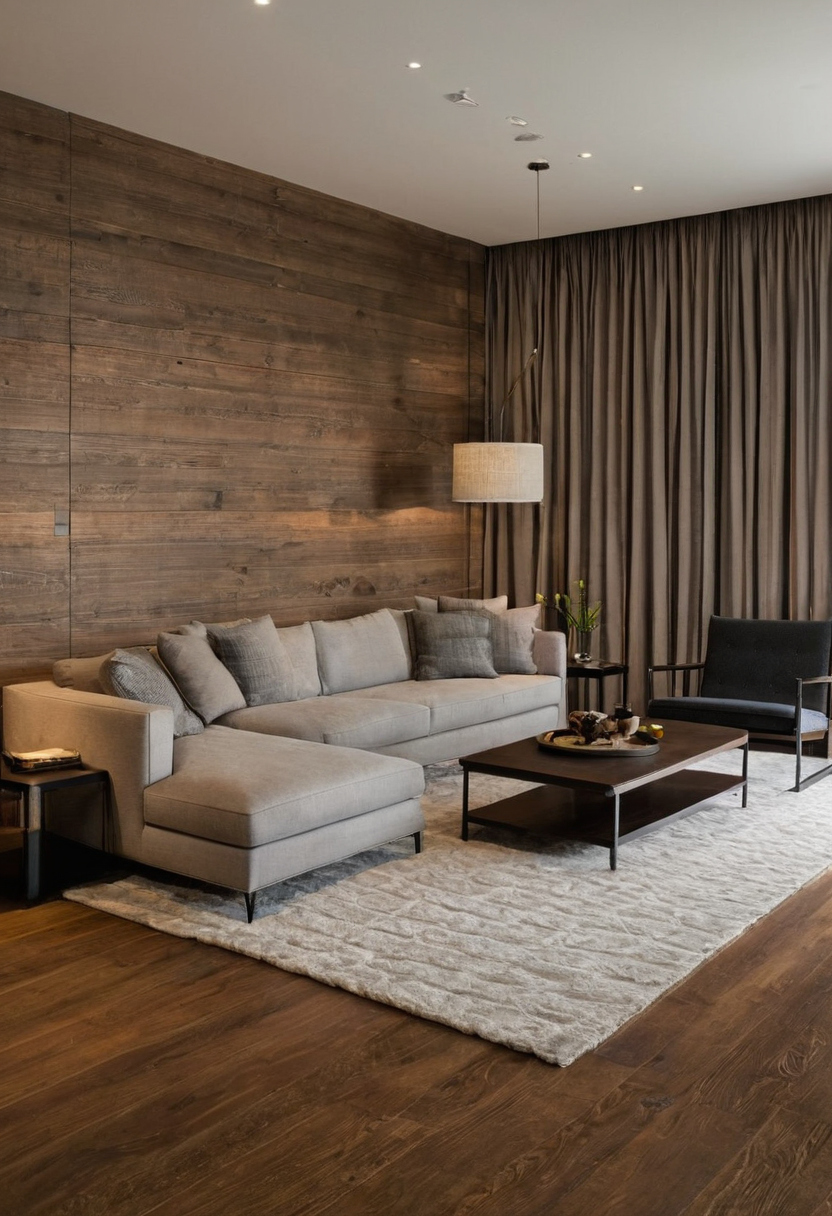
Choose the sofa or sectional footprint by circulation clearance, not by showroom scale shown with floor, wall, and fixture relationships visible.
The 2010 ADA Standards for Accessible Design specify a 30 by 48 inch clear floor or ground space for wheelchair positioning. A living room planned for mobility equipment should not depend on decorative tightness.
What sofa depth works for different users and room sizes?
Sofa depth controls comfort and floor consumption. Upright sofas often have seat depths around 20 to 22 inches, while lounge sofas and deep sectionals often move into the 24 to 28 inch range before loose back pillows are considered.
Shorter users often need a shallower seat, firmer back cushion, or pillow support to sit with feet on the floor. Taller users may prefer deeper seating, but total sofa depth determines whether the room still has space for a rug, table, and walkway.
Set viewing, conversation, and table distances before selecting a livingroom set
A livingroom set should be judged by how people sit, talk, watch, reach, and move, not by how well the pieces match in a showroom.
How far should the sofa be from the TV in a living room?
Television distance should start with screen size and use pattern. A 4K television can usually sit closer than an older low-resolution screen, but the room still needs neck comfort, glare control, and walking paths.
- Casual TV rooms: plan roughly 1.5 to 2.5 times the screen diagonal between viewer and screen, then adjust for eyesight and room depth.
- Movie or gaming rooms: test a closer position, often near 1 to 1.5 times the screen diagonal for 4K screens, if the viewing angle feels comfortable.
- TVs above fireplaces: sit in the taped sofa position and check whether the chin lifts for long viewing.
- Damp walls: fix condensation and damp spots before placing upholstery, storage, or electronics there. The U.S. Environmental Protection Agency advises prompt moisture correction in its mold and moisture guide.
How should coffee tables and side tables be sized around seating?
Table dimensions should serve seated reach first. A coffee table usually works best about 14 to 18 inches from the sofa or chair edge.
- Coffee table height: choose a table at the same height as the sofa seat or within about 1 to 2 inches lower.
- Coffee table length: use about one-half to two-thirds of the sofa length.
- Side table height: keep the tabletop close to the sofa or chair arm height, usually within about 2 inches.
- Lift-top tables and ottomans: tape the closed footprint and the open position.
Table form also matters. Leg placement, corners, and overhangs affect circulation, the same practical issue behind many table proportion and placement ideas.
Size the living room rug to the seating plan before choosing color or pattern
A living room rug should be sized after the seating footprint because the rug visually organizes the furniture group. The useful question is whether sofa legs, chair legs, table legs, and walkways land in stable positions.
Rug labels are planning shortcuts. Machine-made rugs usually stay close to listed size, while handmade, handwoven, and natural-fiber rugs can vary by several inches. Confirm the finished size before ordering a rug pad.
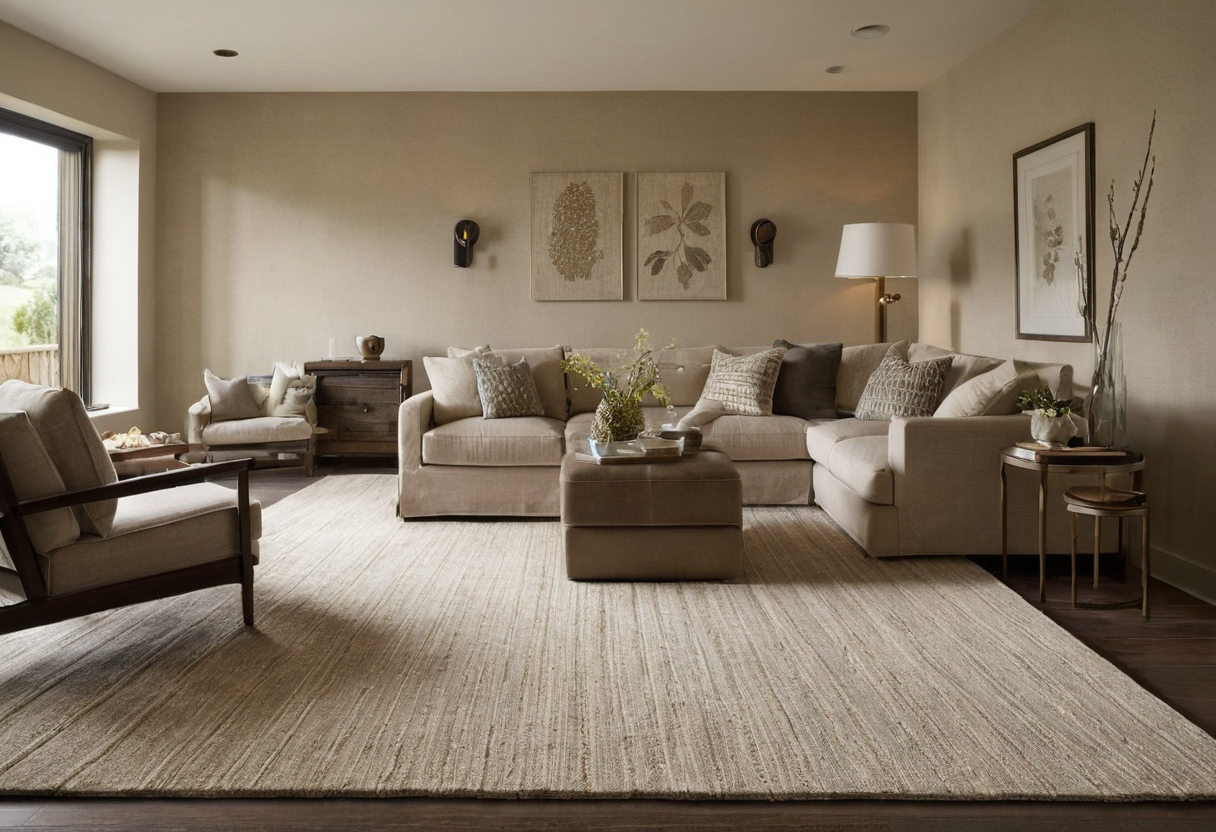
Size the living room rug to the seating plan before choosing color or pattern shown with floor, wall, and fixture relationships visible.
Rug material affects maintenance. Wool handles traffic well, cotton and washable rugs suit casual rooms, jute can shed and dislike damp cleaning, polypropylene resists stains, and viscose often performs poorly with spills. The U.S. Environmental Protection Agency identifies furnishings as common indoor sources of volatile organic compounds and recommends increased ventilation when products that emit VOCs are used indoors.
What rug size works under a sofa and chairs?
The rug should support the seating arrangement, not float like a small island under the coffee table.
| Rug size | Best use | Layout risk |
|---|---|---|
| 5×8 | Small apartment seating or single sofa with compact table | Often too small for sofa and chair legs |
| 6×9 | Small sofa, one chair, narrow room | Can look skimpy under a full group |
| 8×10 | Standard sofa with two chairs, front-legs-on layout | May stop short of a chaise or wide sectional |
| 9×12 | Sectional, larger sofa group, open-plan living area | Requires checking door clearance and walkway edges |
| 10×14 | Large open room, all-legs-on seating group | Heavy delivery, harder returns, higher pad cost |
Rug extension is the diagnostic. The rug should extend beyond the sofa width or chair fronts enough that furniture legs do not teeter on the border, one of the simple home design rules that prevents a room from looking patched together.
What rug placement works with an L-shaped sectional?
An L-shaped sectional needs a rug aligned with the long sofa run and the chaise return. Rotate the rug so the larger dimension follows the longest seating line, then check that the coffee table sits fully on the rug.
A rug that stops before the chaise makes the chaise look detached. A rug that catches only one accent chair leg creates wobble, and a thick rug pad can block a nearby door or make a low coffee table feel awkward.
Plan storage, media units, and accent chairs after the main seating path is protected
Storage furniture and accent chairs should come after the sofa, rug, and circulation decisions because they fill remaining space rather than define the room.
How wide should a media console be compared with the TV?
A media console usually looks stable when it is wider than the actual TV width, not just sized to the diagonal screen number. A practical target is 6 to 12 inches wider on each side when wall space allows, with low consoles often around 24 to 32 inches high and 16 to 22 inches deep.
If the TV sits on the console, check the screen centerline from the main seat. If the TV is wall-mounted, the console can sit lower, but drawers, doors, and component shelves still need working space.
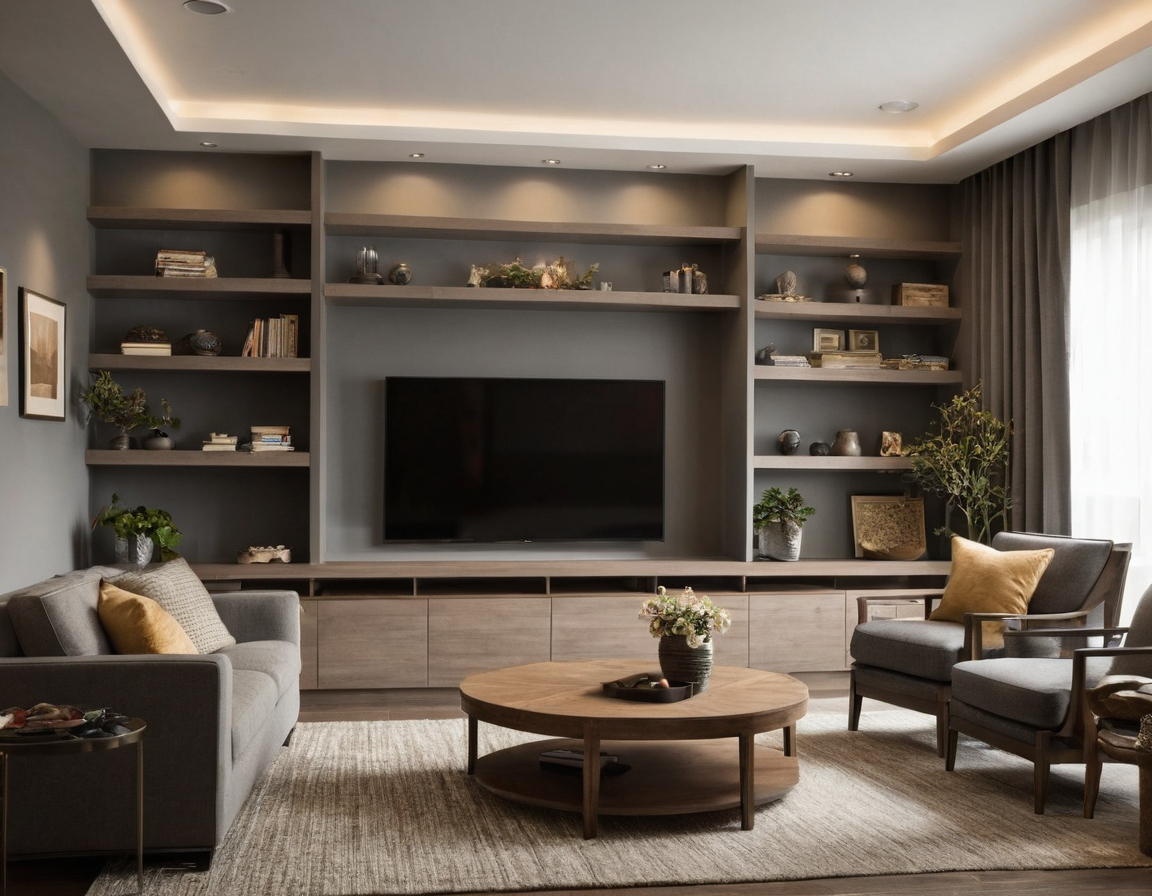
Plan storage, media units, and accent chairs after the main seating path is protected shown with finish, fixture, and clearance relationships visible.
- Cabinet clearance: keep about 30 to 36 inches in front of drawers and doors.
- Component ventilation: avoid sealed cabinets unless vents, open backs, or manufacturer air gaps are provided.
- Tall storage: anchor bookcases, display cabinets, and narrow towers to the wall.
Where do accent chairs work without crowding the living room?
Accent chairs work best where they complete a conversation group, create a reading corner, or soften an open-plan transition. Typical accent chairs run about 28 to 36 inches wide and 30 to 38 inches deep.
Chair placement fails when a leftover corner blocks a walkway, window access, fireplace path, or sliding door. Tape the chair footprint, then add room for the ottoman, floor lamp, side table, and the person pulling the chair back.
Buy living room furniture in a sequence that reduces sizing, delivery, and return risk
The safest purchase sequence is layout first, largest upholstery second, rug third, tables fourth, and accessories last.
Should the sofa or rug be bought first?
The sofa or sectional should usually lead when seating dimensions are tight, upholstery is made to order, or delivery access is difficult. Made-to-order upholstery and custom sectionals often run 8 to 16 weeks or longer, and many custom pieces cannot be returned once production starts.
The rug can lead when the room depends on an antique, vintage, one-of-a-kind, or custom rug. Oversized, final-sale, custom-cut, or imported rugs can carry return limits, restocking fees, freight costs, or long lead times.
Protect the hard-to-change pieces first: sofa or sectional, rug, main tables, lighting, storage, then decor. Lighting can wait until the furniture plan is fixed, but ENERGY STAR says qualified LED lighting uses at least 75 percent less energy and lasts up to 25 times longer than incandescent lighting.
What should be taped on the floor before ordering furniture?
Painter’s tape should mark every footprint that affects movement: sofa, sectional, chaise return, rug edge, coffee table, side tables, media unit, accent chair, recliner extension, door swing, and walking route.
- Order fabric swatches, rug samples, and finish samples before paying for custom or final-sale pieces.
- Tape the largest seating option first, then tape the rug and tables around it.
- Walk the taped plan for several days before ordering high-cost or nonreturnable furniture.
- Check elevator size, stair turns, doorway width, hallway width, and packaged furniture dimensions.
A living room purchase is ready when the taped layout works on an ordinary day. For more planning balance between appearance and daily use, compare these choices with stylish yet functional home design decisions.
FAQ
What is the 2 2 1 rule for sofas, and when does it work in a living room?
The 2 2 1 rule usually means two sofas, two chairs, and one coffee table or central piece. It works in larger rooms where the pieces can face each other without blocking walkways.
What is the 2/3 rule for sofas and coffee tables?
The 2/3 rule suggests a coffee table should be about two-thirds the length of the sofa. Treat it as a proportion guide, then confirm reach, knee clearance, and circulation.
What is the 3-5-7 rule of decorating, and should it affect furniture layout?
The 3-5-7 rule groups decorative objects in odd numbers. Use it for styling after the furniture plan works, not as a reason to crowd seating or storage.
What is the 60 30 10 rule for living rooms?
The 60 30 10 rule divides color into a dominant color, secondary color, and accent color. It can guide upholstery, rug, and decor choices after layout, scale, and clearance decisions are settled.
Can an 8×10 rug work with a sectional in a living room?
An 8×10 rug can work with a compact sectional when the front legs and coffee table sit cleanly on the rug. A larger sectional often needs a 9×12 or bigger rug to avoid a detached chaise or unstable chair legs.
Buy the living room only after the measured plan passes. A sofa, rug, or sectional that protects doors, paths, reach, viewing, and delivery access has a far better chance of feeling right after the receipt is final.